You are typing quickly and need the plural word for “this.” You write “theese,” but something looks wrong. Is it “theese” or “these”? This question pops up constantly because English spelling does not always match how words sound. People search for this exact phrase because they are unsure, they are checking a text message before sending it, or they saw someone else write it and want to know who is right. The short answer: “these” is correct. “Theese” is not a word in standard English. But knowing the right spelling is only half the story. This article explains where the confusion comes from, how British and American English handle similar spelling patterns, and how to avoid this mistake for good. Whether you are writing an email, a school essay, or a social media post, this guide gives you a clear, simple answer.
“Theese or These” – Quick Answer
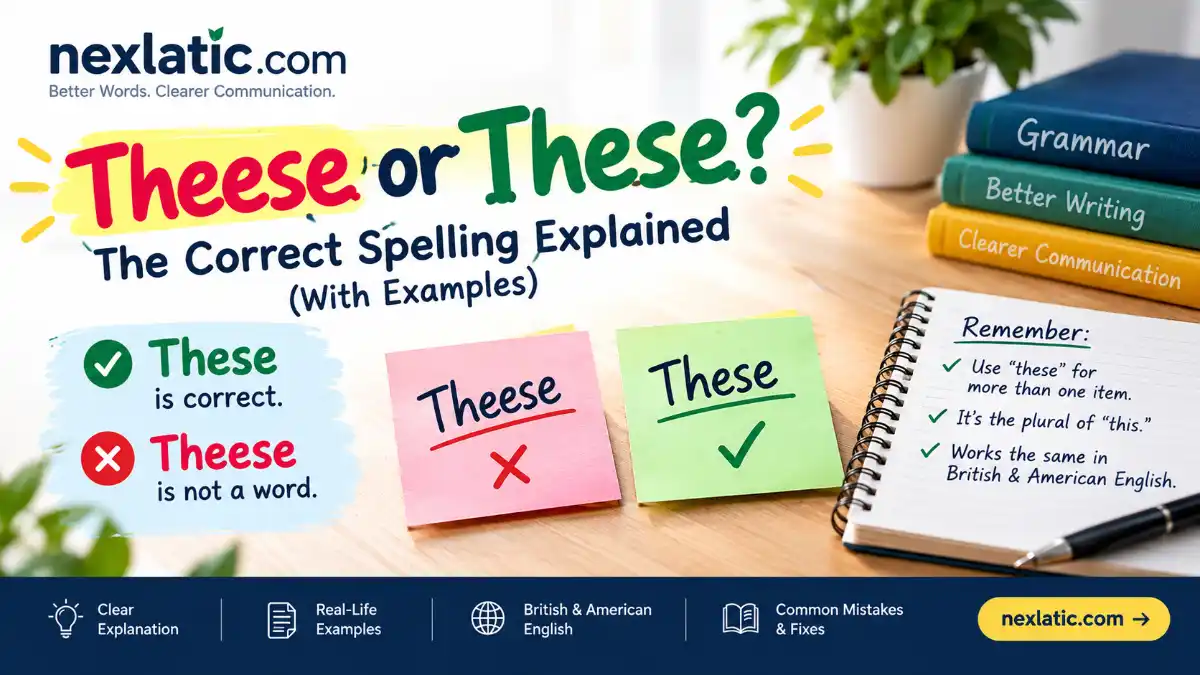
The correct spelling is these. “Theese” is a common misspelling and does not appear in any English dictionary.
- Correct: These shoes are new.
- Incorrect: Theese shoes are new.
“These” is the plural form of “this.” You use it when pointing to more than one item that is close to you.
- This book (one item)
- These books (many items)
There is no version of English American, British, or otherwise where “theese” is accepted. It is simply a spelling error, usually caused by sounding the word out incorrectly.
The Origin of “These”
“These” comes from Old English. It developed from the word “þæs” and related forms used with “this” (þis) to show plural meaning. Over centuries, English spelling settled into the modern form: t-h-e-s-e.
The double “e” in “these” follows a common English pattern where “ee” or a single “e” followed by a silent “e” creates a long “ee” sound. Words like “these,” “complete,” and “extreme” follow similar spelling logic.
“Theese” likely comes from people mixing up two patterns:
- The sound of the word (which does sound like “theez”)
- Confusion with double-vowel spellings like “see,” “tree,” or “free”
This mix-up is natural. English spelling is not always phonetic, so learners and even native speakers sometimes guess wrong.
British English vs American English Spelling
Good news: this is one spelling rule that does not change between British and American English. Unlike words such as “colour/color” or “organise/organize,” “these” is spelled the same way everywhere.
Here is a comparison table showing this word alongside other spelling differences, so you can see why confusion sometimes spreads to words like “these” even though it should not:
| Word Type | American English | British English | Notes |
| Plural of “this” | these | these | No difference |
| Color words | color | colour | Different |
| -ize/-ise verbs | organize | organise | Different |
| Defense words | defense | defence | Different |
| Theese (misspelling) | Not valid | Not valid | Incorrect everywhere |
The takeaway: while many words shift between US and UK spelling, “these” is one of the safe, universal words. If you see “theese,” it is a typing or spelling mistake, not a regional variation.
Which Spelling Should You Use?
No matter where you are writing from, use these.
- United States: Use “these.” No regional variation exists.
- United Kingdom, Canada, Australia, and other Commonwealth countries: Use “these.” Same spelling applies.
- Global or ESL writers: Use “these.” This word is standardized across all English dialects.
If you are unsure about other spelling differences (like “-ize” vs “-ise”), that depends on your audience. But for this specific word, there is only one correct choice.
Common Mistakes with “These”
Here are frequent errors people make, along with corrections:
- ❌ Theese → ✅ These
- ❌ Thease → ✅ These
- ❌ Thes → ✅ These
- ❌ “These is” → ✅ “These are” (subject-verb agreement)
- ❌ Using “these” for a single item → ✅ Use “this” instead
Example correction:
- Wrong: Theese is my favorite song.
- Right: This is my favorite song. (singular)
- Right: These are my favorite songs. (plural)
“These” in Everyday Examples
In emails:
Please review these documents before Friday.
For exapmle in news writing:
These policies will affect thousands of workers starting next month.
In social media posts:
These photos from the trip are unreal 😍
In formal writing:
These findings suggest a strong correlation between the two variables.
Across every context casual or professional the spelling stays the same: these.
“Theese or These” – Google Trends & Usage Data
Search data shows that “theese or these” is a common query worldwide, especially among:
- Students and ESL learners double-checking spelling
- Mobile users who mistype due to autocorrect
- Writers verifying grammar before publishing content
Interest in this search term tends to be steady rather than seasonal, since spelling questions come up year-round. Searches appear across English-speaking countries, with no single country dominating, since the misspelling comes from sound-based confusion rather than a regional dialect issue.
Keyword Variations Comparison Table
| Variation | Correct? | Common Use Case |
| These | ✅ Yes | Standard plural of “this” |
| Theese | ❌ No | Common misspelling |
| Thease | ❌ No | Less common misspelling |
| Thes | ❌ No | Typo/shortened error |
| This | ✅ Yes | Singular form (different meaning) |
FAQs
1. Is “theese” ever correct?
No. “Theese” is not a recognized word in any English dictionary.
2. Why do people write “theese” instead of “these”?
It usually happens because “these” sounds like “theez,” and writers guess at the spelling based on sound rather than memory.
3. Is “these” different in British and American English?
No. “These” is spelled the same in both British and American English.
4. What is the difference between “this” and “these”?
“This” is singular (one item). “These” is plural (more than one item).
5. Can “theese” be a name or brand?
It is not a standard word, but it could theoretically be used as a stylized brand name. As a regular word, it is always incorrect.
6. How can I remember the correct spelling?
Think of “these” like other double-e words such as “trees” or “sees.” Removing the “th” leaves “ese,” which rhymes with familiar words.
7. Does autocorrect fix “theese” automatically?
Most modern spellcheckers will flag or correct “theese” to “these,” but it is safer not to rely on autocorrect alone, especially in fast typing or voice-to-text tools.
Conclusion
The confusion between “theese” and “these” is common, but the answer is simple: these is always correct, and “theese” is always a spelling mistake. This applies across American English, British English, and every other English-speaking region, since this particular word does not change with dialect. The error usually comes from how the word sounds rather than any real grammar rule, which is why so many people search for clarity. Now that you know the correct spelling, the origin of the word, and how it is used in real-world writing from emails to news articles to social media you can use “these” with confidence. Whether you are a student, a professional writer, or someone double-checking a text message, remembering this one simple rule will help you avoid a small but noticeable mistake in your writing.

Ali Bismal is the founder and writer behind Nexlatic.com, a growing online platform created to provide useful, informative, and easy-to-understand content for everyday readers. Through Nexlatic, Ali shares practical ideas, helpful guides, interesting topics, and engaging articles designed to make information simple and accessible. His goal is to create reliable, reader-focused content that helps people learn something new, find useful answers, and make everyday life a little easier.