Standing in the grocery aisle, staring at two nearly identical bags of beans, is a common moment of confusion. Both are brownish, both are labeled “dried beans,” and most recipes just say “beans” without explaining which kind. So people search “black or pinto beans” hoping for a fast, clear answer.
This confusion is not really about the beans themselves. It’s about not knowing if they can be swapped in a recipe, which one tastes better, which one is healthier, and which one fits a specific dish like chili, tacos, or soup. Cookbooks rarely explain this. Recipe blogs usually assume you already know.
This article gives a quick answer first, then goes deeper. You’ll learn where each bean comes from, how they differ in taste and texture, which one fits which dish, and the most common mistakes people make when choosing between them. By the end, you’ll know exactly which bean to reach for, every time.
Black or Pinto Beans Quick Answer
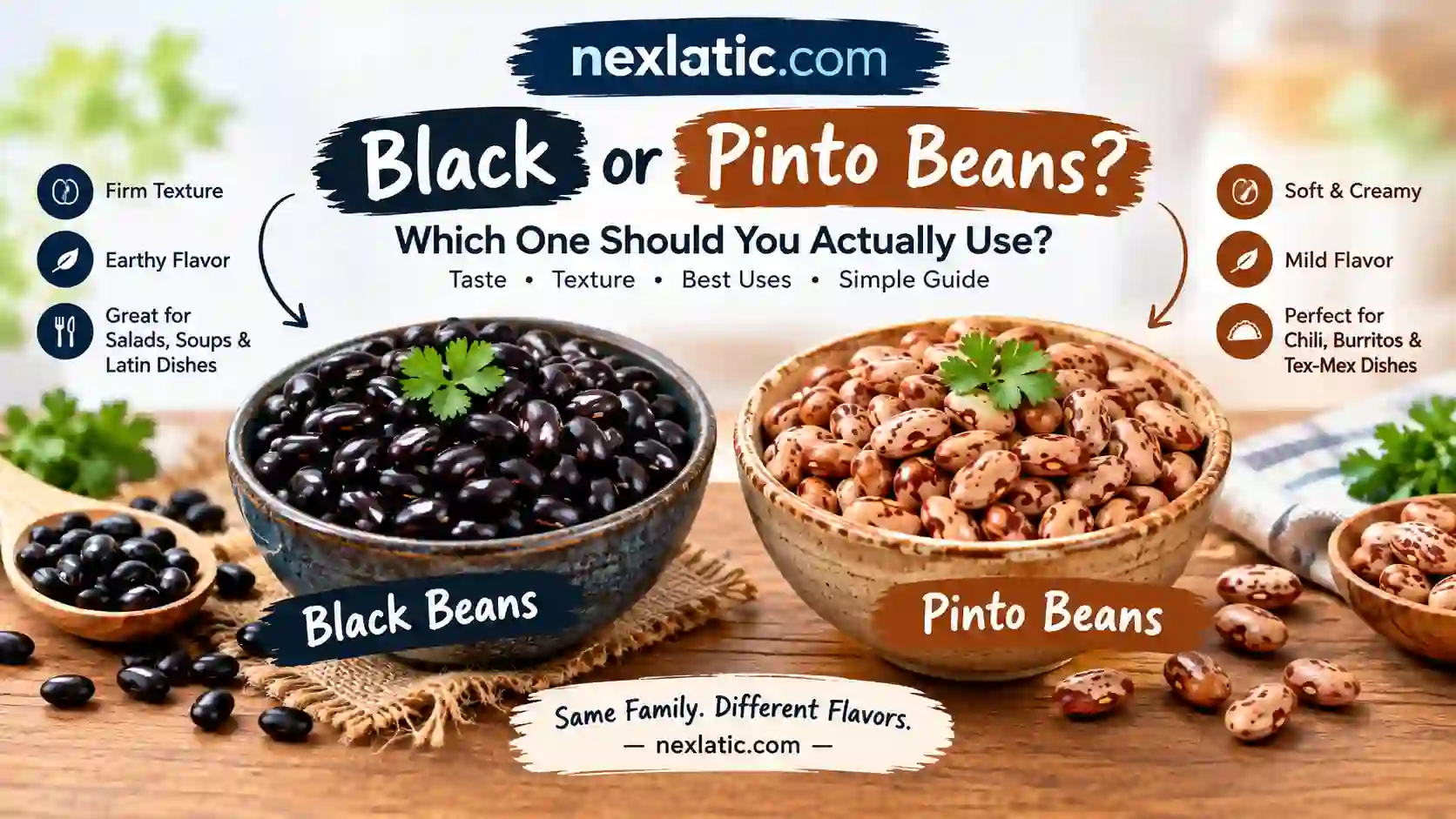
Use black beans for Latin American dishes like rice and beans, black bean soup, or salads. They hold their shape and have a firm, slightly sweet flavor.
Use pinto beans for Tex Mex and Southwestern dishes like refried beans, chili, and burritos. They turn soft and creamy when cooked, which makes them easy to mash.
In most recipes, you can swap one for the other. The dish will still work. The flavor and texture will just change slightly.
The Origin of Black and Pinto Beans
Both beans come from the same plant species, Phaseolus vulgaris, also called the common bean. This plant was first grown in Central and South America thousands of years ago.
Over time, farmers grew different varieties for different climates and dishes. Black beans became popular in the Caribbean, Mexico, and South America. Pinto beans became popular in Mexico and the southwestern United States.
The name “pinto” comes from the Spanish word for “painted,” describing the beans’ mottled brown and cream speckles. Black beans are named simply for their color, which turns fully black when dried.
Neither name is a spelling variation. They are two separate bean varieties with different genetics, appearances, and traditional uses.
Black Beans vs Pinto Beans: Key Differences
| Feature | Black Beans | Pinto Beans |
| Color (dried) | Solid black | Beige with brown speckles |
| Color (cooked) | Stays dark, almost purple black | Turns pale pink brown |
| Texture | Firm, holds shape | Soft, creamy |
| Flavor | Earthy, slightly sweet | Mild, nutty |
| Best used in | Rice bowls, salads, soups | Refried beans, chili, burritos |
| Common cuisine | Cuban, Brazilian, Mexican | Tex Mex, Southwestern US |
| Cooking time (dried) | 60 90 minutes | 60 90 minutes |
| Popular canned use | Salsas, grain bowls | Dips, mashed sides |
Which Should You Use?
If you’re making Latin American or Caribbean dishes: choose black beans. They’re standard in Cuban rice and beans, Brazilian feijoada, and many Mexican salads.
If you’re making Tex Mex or Southwestern dishes: choose pinto beans. They’re the default for refried beans, classic American chili, and burrito fillings.
If a recipe doesn’t specify: either bean works. Pick based on the texture you want. Choose black beans if you want the beans to stay firm. Choose pinto beans if you want a softer, creamier result.
If you’re new to cooking with beans: start with pinto beans. They’re forgiving, mash easily, and work in more beginner friendly recipes like chili and dips.
Common Mistakes with Black or Pinto Beans
Mistake: Assuming they taste the same. They don’t. Black beans are earthier. Pinto beans are milder and creamier.
Mistake: Using canned beans without draining. The liquid in canned beans is often salty and starchy. Rinse before using, unless a recipe calls for the liquid.
Mistake: Skipping the soak for dried beans. Soaking dried beans overnight cuts cooking time and makes them easier to digest.
Mistake: Confusing pinto beans with kidney beans. They look similar dried but cook very differently. Pinto beans soften more.
Mistake: Adding salt too early. Salting dried beans at the start of cooking can toughen the skins. Add salt near the end instead.
Black or Pinto Beans in Everyday Examples
In recipes: “This chili uses pinto beans for a creamy texture” or “Add black beans for a firmer bite in this salad.”
In emails or meal prep notes: “Can you grab a can of black beans for the burrito bowls?”
For example in social media captions: “Sunday meal prep: black bean and quinoa bowls for the week.”
In news or health articles: “Both black and pinto beans are high in fiber and plant based protein, making them a staple in many diets.”
In formal writing, like nutrition guides: “Pinto beans provide a good source of folate and iron, comparable to black beans.”
Black or Pinto Beans Google Trends & Usage Data
Search interest for both beans tends to rise around meal planning seasons, especially January (New Year health goals) and during colder months, when chili and soup recipes are more popular.
Pinto beans see higher search interest in the United States, especially in southern and southwestern states, tied to Tex Mex cuisine. Black beans see stronger interest in regions with larger Latin American and Caribbean food influence, and in health focused searches tied to plant based diets.
Globally, both beans appear frequently in vegetarian and vegan recipe searches, since both are common meat substitutes for protein and fiber.
Keyword Variation Comparison Table
| Search Term | Typical Intent | Common Region |
| Black or pinto beans | Comparing the two, unsure which to use | Global |
| Black beans vs pinto beans | Direct comparison for recipes | US, Latin America |
| Pinto beans substitute | Looking for an alternative | US |
| Black bean substitute | Looking for an alternative | Global |
| Dried beans comparison | Broader research on bean types | Global |
FAQS
Are black beans and pinto beans interchangeable?
Yes, in most recipes. The dish’s flavor and texture will change slightly, but the swap won’t ruin it.
Which is healthier, black beans or pinto beans?
Both are similar in protein, fiber, and iron. Neither is significantly healthier than the other.
Can I use canned beans instead of dried?
Yes. Canned beans are already cooked and save time. Just rinse them before use.
Why do pinto beans turn pink when cooked?
The speckled skin color blends together during cooking, creating a soft pink brown shade.
Do black beans and pinto beans cook at the same speed?
Yes, roughly. Both take 60 90 minutes when boiled from dried, without a pressure cooker.
Which bean is better for refried beans?
Pinto beans. Their soft, creamy texture mashes more easily than black beans.
Are pinto beans the same as kidney beans?
No. They are different varieties with different shapes, colors, and cooking textures.
Conclusion
Choosing between black beans and pinto beans doesn’t have to be confusing. Black beans are firm, earthy, and common in Latin American and Caribbean cooking. Pinto beans are soft, mild, and common in Tex Mex dishes like chili and refried beans.
In most recipes, the two are interchangeable. Choose based on the texture and flavor you want, not strict rules. Black beans hold their shape in salads and rice bowls. Pinto beans soften into creamy dips and hearty chili.
Both are affordable, high in protein and fiber, and easy to cook from dried or canned. Keep both in your pantry, and you’ll always have the right bean for the recipe in front of you.

Ali Bismal is the founder and writer behind Nexlatic.com, a growing online platform created to provide useful, informative, and easy-to-understand content for everyday readers. Through Nexlatic, Ali shares practical ideas, helpful guides, interesting topics, and engaging articles designed to make information simple and accessible. His goal is to create reliable, reader-focused content that helps people learn something new, find useful answers, and make everyday life a little easier.