You grab the vacuum. Then you spot dust on the shelf. Should you stop? Or keep going? This small choice trips up a lot of people. You want a clean home. You want to save time. And nobody wants to clean the same floor twice.
That is why so many people search “vacuum or dust first.” They have heard two different answers. One friend says vacuum first. Another says dust first. Both sound sure. So the question stays.
This guide ends the confusion. The short answer is simple: dust first, then vacuum. But the reason matters too. When you know why, you can fix the order for any room. You will also learn common mistakes, real examples, a quick table, and answers to common questions.
Read on, and you will never wonder again. Your floors will thank you. So will your nose.
Vacuum or Dust First Quick Answer
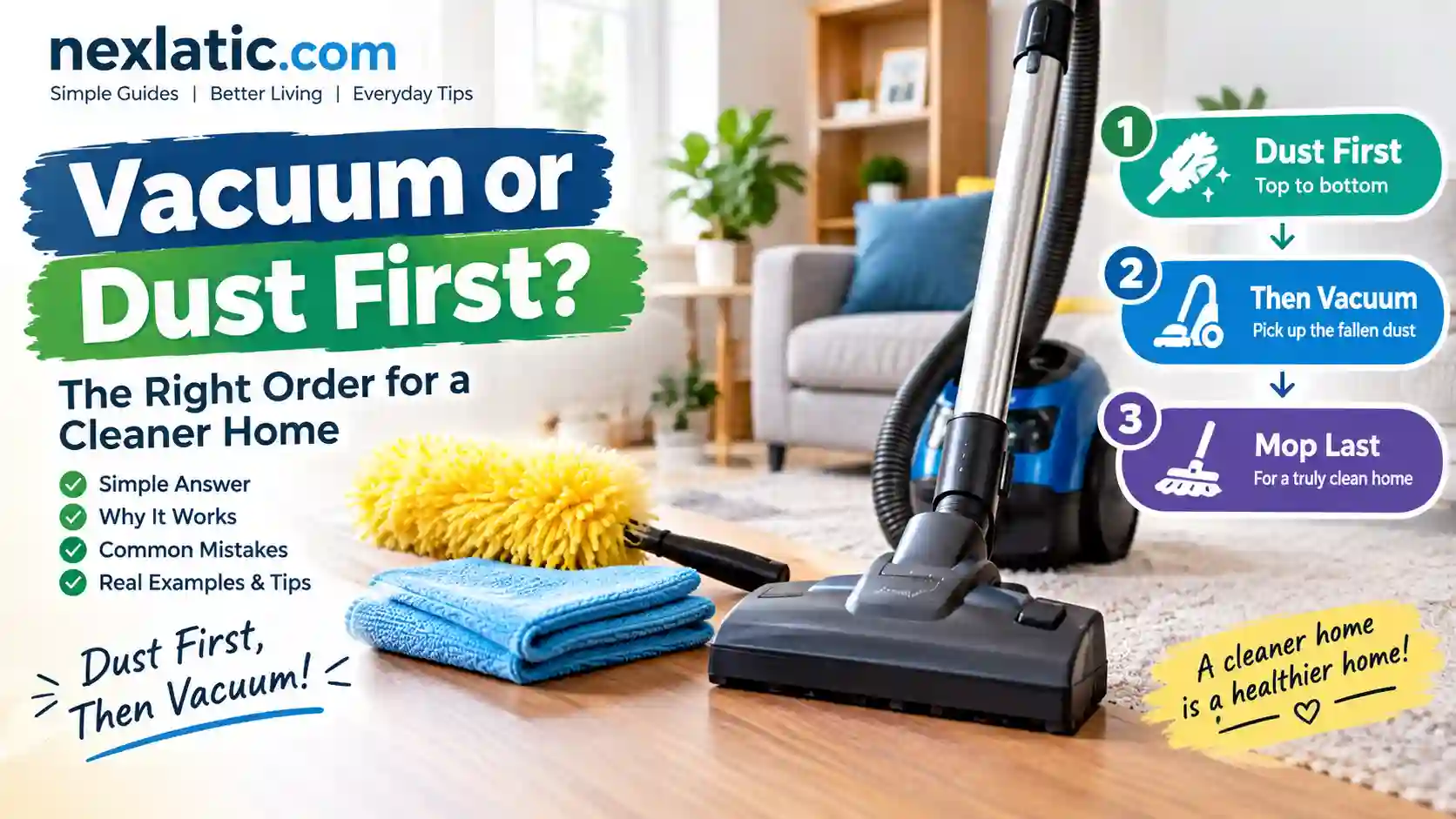
Dust first. Then vacuum.
Dust does not vanish. When you wipe a shelf, some dust lands on the floor. Some floats in the air and settles later. If you vacuum first, that dust ruins your clean floor. You must vacuum again.
Here are simple examples:
- Living room: Dust the TV stand, shelves, and sofa arms. Then vacuum the carpet.
- Bedroom: Wipe the nightstand and dresser. Then vacuum the rug.
- Office: Dust the desk and monitor. Then vacuum the floor.
Work from top to bottom. Start high, like ceiling fans and shelves. End low, with the floor. Gravity does the rest.
The Origin of the “Dust First” Rule
The rule is older than the vacuum cleaner. Before machines, people swept floors with brooms. Sweeping threw dust into the air. So careful housekeepers did floors last. That way, falling dust was cleaned up in the same pass.
Then came powered cleaners. In the early 1900s, people began using electric vacuum cleaners at home. Early machines were heavy and leaked fine dust back into the air. The old advice stayed: dust first, floors last.
Why the debate today? Two things:
- Modern vacuums are better. Many have strong filters. So some people think order no longer matters.
- Cleaning tools changed. Microfiber cloths trap dust instead of spreading it. This makes some people think vacuum first is fine.
Both ideas have a grain of truth. But dust still falls. The old rule still works.
British English vs American English: Cleaning Words
The spelling of “vacuum” is the same in both countries. But the words around it differ. This can change how people search for the same question.
| Meaning | American English | British English |
| Clean floors with a machine | Vacuum | Hoover, vacuum |
| The machine | Vacuum cleaner | Hoover, vacuum cleaner |
| The action | Vacuuming | Hoovering |
| Wipe dust | Dust | Dust |
| Dust tool | Duster, dust cloth | Duster, dusting cloth |
| Floor cleaning tool | Mop | Mop |
| Common search | “Vacuum or dust first” | “Hoover or dust first” |
“Hoover” comes from a brand name. In the UK, it became a common word, like “Google” for search. In the US, people mostly say “vacuum.”
Which Wording Should You Use?
Pick the word your readers use.
- US readers: Use “vacuum” and “vacuuming.”
- UK and Commonwealth readers: Use “hoover” or “hoovering” in casual writing. Use “vacuum” in formal writing.
- Global readers: Use “vacuum.” Everyone knows it, and it works everywhere.
If you write a blog or product page, use both terms once. For example: “Vacuum (or hoover) after you dust.” This helps search engines and readers.
Common Mistakes with Vacuum or Dust First
Mistake 1: Vacuuming first.
Fix: Dust first. Falling dust will land on a clean floor.
Mistake 2: Dusting from the bottom up.
Fix: Start high. End low.
Mistake 3: Using a dry, old rag.
Fix: Use a slightly damp microfiber cloth. It traps dust instead of pushing it around.
Mistake 4: Skipping a wait.
Fix: Let airborne dust settle for 10 to 15 minutes. Then vacuum.
Mistake 5: Forgetting soft surfaces.
Fix: Vacuum sofas and curtains too. Do that after you dust hard surfaces.
Mistake 6: Dusting after mopping.
Fix: Mop last. Always.
Vacuum or Dust First in Everyday Examples
Email to a cleaner:
“Please dust all surfaces first. Then vacuum the floors. Mop last.”
News or magazine tip:
“Experts say to dust before you vacuum. This stops dust from settling on clean floors.”
Social media post:
“Dust first, vacuum second. Do it the other way and you clean twice. 🧹”
Formal cleaning checklist:
“Cleaning sequence: (1) declutter, (2) dust from high to low, (3) vacuum, (4) mop.”
Text to a roommate:
“Dust the shelves before you vacuum. Trust me.”
Vacuum or Dust First Search Trends and Usage
I can’t pull live Google Trends numbers, so I won’t make any up. Here is what usually shapes searches like this:
- Spring cleaning season. Cleaning questions often rise in spring in the Northern Hemisphere.
- Before holidays. People clean before guests arrive.
- Move in and move out times. Renters search for cleaning order tips.
- Country wording. US users tend to type “vacuum.” UK users often type “hoover.”
- Question forms. Many people type full questions, such as “should I dust before vacuuming.”
To check real data: Open Google Trends. Type “vacuum or dust first.” Compare it with “dust or vacuum first” and “hoover or dust first.” Filter by country and time range.
Keyword Variations Side by Side
| Keyword variation | Likely searcher | Search intent | Best answer |
| Vacuum or dust first | General | Quick answer | Dust first |
| Dust or vacuum first | General | Quick answer | Dust first |
| Do you dust or vacuum first | Beginner | Explanation | Dust first, then vacuum |
| Should I dust before vacuuming | Careful cleaner | Reason | Yes, dust falls on floors |
| Hoover or dust first | UK reader | Quick answer | Dust first, then hoover |
| Vacuum before or after dusting | Practical cleaner | Order check | After dusting |
FAQS
1. Do you vacuum or dust first?
Dust first. Then vacuum. Dust falls to the floor, so vacuum last.
2. Why dust before vacuuming?
Dusting moves dust around. Some lands on the floor. Vacuuming afterward picks it up in one pass.
3. Should I vacuum first if the floor is very dirty?
Not usually. If you see large crumbs or debris, you can do a quick pass. But still do a full vacuum after dusting.
4. How long should I wait between dusting and vacuuming?
About 10 to 15 minutes. This lets airborne dust settle.
5. What is the best cleaning order for a whole room?
Declutter, then dust high to low, then vacuum, then mop.
6. Does a HEPA vacuum change the order?
No. A good filter helps your air. But dust still falls after you dust. The order stays the same.
7. What tool is best for dusting?
A microfiber cloth or duster. It traps dust instead of spreading it. Slightly damp works well on most hard surfaces.
8. Do I dust or vacuum first with allergies?
Dust first with a damp cloth, then vacuum with a filtered machine. Ask a doctor for personal medical advice.
Conclusion
So, vacuum or dust first? The answer is clear: dust first, then vacuum.
Dust falls. When you wipe shelves and tables, some dust drops to the floor. If you vacuum before dusting, you undo your own work. If you dust first, the vacuum catches everything in one pass.
Remember these simple rules:
- Work from top to bottom.
- Use a damp microfiber cloth.
- Wait 10 to 15 minutes for dust to settle.
- Vacuum next. Mop last.
Also remember the wording. Use “vacuum” for a global audience. Use “hoover” for casual UK writing.
Good habits save time. They also make your home feel fresher. The order takes no extra effort. You only need to do the steps in the right way. Next time you clean, start with the dust. Finish with the floor. You will only have to clean once.

Ali Bismal is the founder and writer behind Nexlatic.com, a growing online platform created to provide useful, informative, and easy-to-understand content for everyday readers. Through Nexlatic, Ali shares practical ideas, helpful guides, interesting topics, and engaging articles designed to make information simple and accessible. His goal is to create reliable, reader-focused content that helps people learn something new, find useful answers, and make everyday life a little easier.